He kissed your face this morning and you turned away.

You didn't mean anything by it. The smell was just strong. Stronger than usual. You figured maybe he got into something, or it's just dog breath, or you'd deal with it later.
Later is now.
That smell is bacteria. Active infection. And if you lifted his lip right now and looked at his gumline, you'd probably see exactly where it's coming from: a rim of reddened tissue, maybe some yellow-brown buildup at the base of the teeth, maybe a spot that bleeds when you touch it.
Your Golden isn't being gross. He's sick. And he can't tell you.
By age three, roughly 80% of dogs have some form of periodontal disease. The bacteria doesn't stay in the mouth — it enters the bloodstream through inflamed gum tissue and circulates through the body. Research has linked chronic periodontal disease to damage in the heart, kidneys, and liver. Goldens, with their stoic temperaments and people-pleasing instincts, are especially good at hiding discomfort. By the time you see your dog pawing at his mouth or dropping food, the disease has often progressed to stages that require extractions.
A professional dental cleaning under anesthesia costs $300 to $700 at most general practices, and that's before extractions. Add a few bad teeth and you're looking at $1,000 or more. Prevention? A toothbrush and dog-specific toothpaste costs under $15.
What's Actually Happening in Your Golden Retriever's Mouth
The process starts within hours of eating. Bacteria, saliva, and food particles combine to form plaque — a sticky film that coats the teeth. This is the stage where brushing matters most, because plaque is soft and easily removed.
Within 24 to 48 hours, that plaque starts to harden. It combines with minerals in the saliva and transforms into tartar (also called calculus). Once it's tartar, brushing won't remove it. Only a professional cleaning under anesthesia can get it off.
The tartar builds up along and below the gumline. The rough surface gives bacteria more places to hide. The gums become inflamed. This is gingivitis, and it's still reversible at this point with professional cleaning and consistent home care.
If nothing changes, the inflammation spreads deeper. The structures that support the teeth — the periodontal ligament, the bone — start to break down. Pockets form between the teeth and gums, trapping more bacteria. Teeth become loose. Eventually, they fall out or need to be extracted. This is periodontal disease, and at advanced stages, the damage is irreversible.
What does each stage look like? Early gingivitis shows as a thin red line along the gumline. Moderate disease shows more redness, swelling, and possibly bleeding when the gums are touched. Advanced disease shows visible tartar buildup (yellow or brown deposits), receding gums, exposed roots, loose teeth, and strong odor.
How to Brush Your Golden Retriever's Teeth
Daily brushing is the gold standard. If that's not realistic, three times per week is the minimum for meaningful plaque reduction. A study on beagle dogs found that brushing daily or every other day produced significantly better results than brushing weekly or biweekly.
Start slow. Most dogs won't tolerate a full brushing session on day one. Begin by letting your Golden smell and taste the toothpaste. Lift his lips and touch his teeth with your finger. Do this for a few days until he's comfortable with mouth handling.
Next, wrap gauze around your finger and gently rub the outer surfaces of the teeth. Once that's going well, introduce the toothbrush. The whole acclimation process typically takes two to four weeks. Rushing it will make future sessions harder.
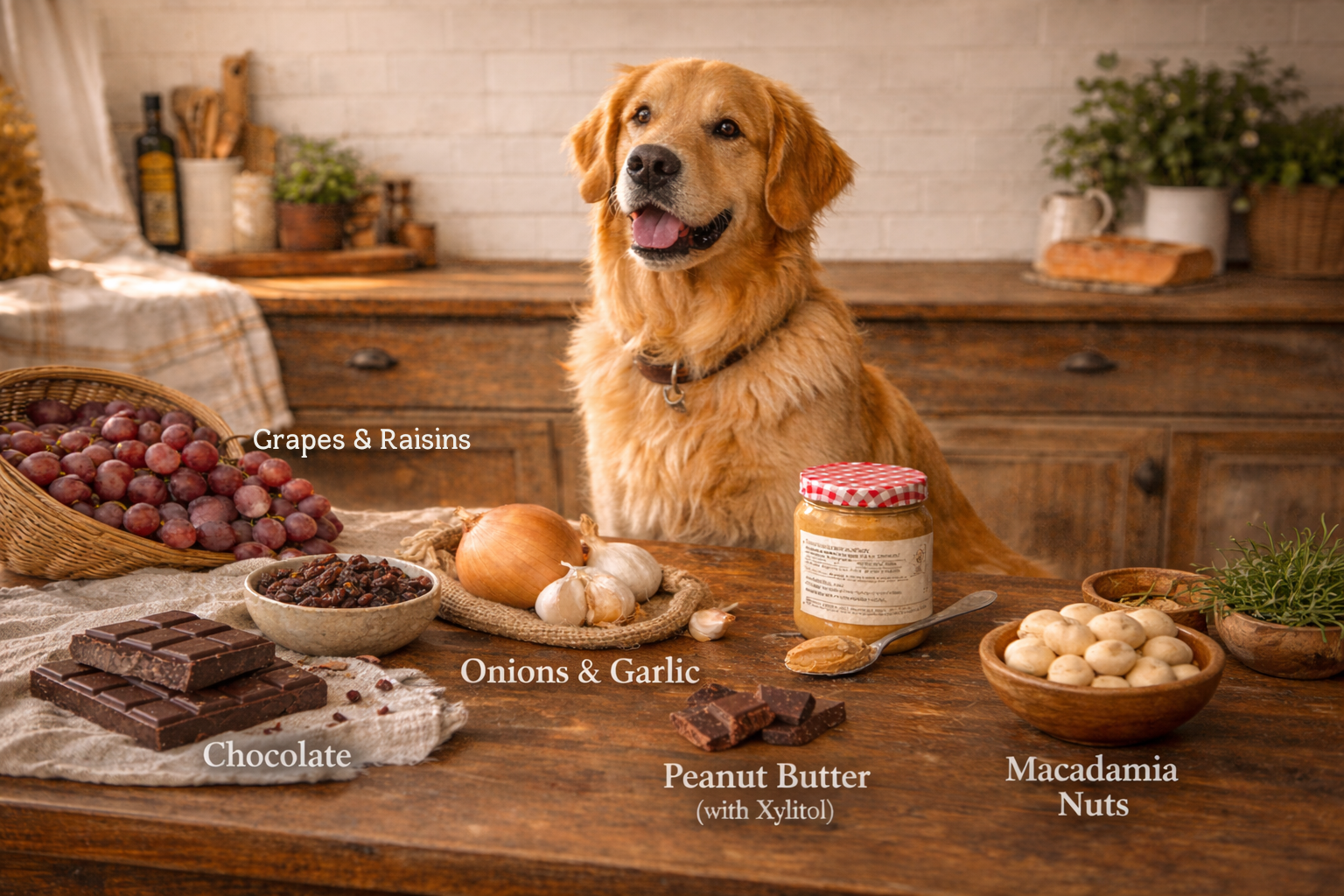
Critical: Never use human toothpaste. Many contain xylitol, a sweetener that's extremely toxic to dogs. Even small amounts can cause life-threatening drops in blood sugar within 10 to 15 minutes, and larger amounts can cause liver failure. Use only toothpaste formulated for dogs.
For technique, hold the brush at a 45-degree angle to the gumline and use small circular motions. Focus on the outer surfaces of the teeth, where plaque accumulates most. The inside surfaces get natural cleaning from the tongue. Aim for 30 seconds per side.
If your Golden resists, back up a step. Go slower. Shorter sessions with lots of praise work better than wrestling matches. Some dogs do better with finger brushes. Some respond to flavored toothpaste (poultry and beef flavors are popular). Find what works for your dog and stay consistent.
What Actually Works Beyond Brushing
Not all dental products are created equal. Here's how to evaluate what's worth your money.
The VOHC seal. The Veterinary Oral Health Council reviews products based on clinical trials. To earn the VOHC seal, a product must demonstrate at least a 20% reduction in plaque or tartar in controlled studies. This isn't a guarantee of perfection, but it means real data backs the claim. Look for the seal on any dental product you're considering.
Dental chews. VOHC-approved chews can help reduce plaque between brushings. They work through mechanical action (chewing) and sometimes through chemical ingredients that inhibit bacterial growth. They're a supplement to brushing, not a replacement. A few minutes of chewing won't compensate for skipping the toothbrush.
Water additives. The evidence here is mixed. Some VOHC-approved additives can help reduce bacterial counts and improve breath. Many products without the seal have little data supporting their claims. If you try one, look for the VOHC seal.
Dental diets. Prescription dental diets use kibble designed to scrape plaque as the dog chews. The evidence is limited, and they're not a substitute for brushing. They may help as part of a broader dental care plan.
Raw bones. This is where opinions vary sharply. Proponents point to natural teeth-cleaning benefits. Critics point to real risks: tooth fractures (especially slab fractures of the upper molars), bacterial contamination, and potential for obstruction or perforation if pieces are swallowed. If you choose to give bones, supervise closely, size appropriately, and never give cooked bones (they splinter). Many vets advise against them altogether.
What doesn't work: Dental sprays and most "dental treats" without the VOHC seal have little evidence behind them. Marketing claims are not the same as clinical data.
Professional Dental Cleanings for Golden Retrievers
Even with perfect home care, your Golden will eventually need professional cleaning. Brushing can't reach below the gumline where tartar accumulates. Only veterinary tools under anesthesia can do that.
Here's what happens during a professional cleaning: your dog goes under general anesthesia. The vet scales the teeth (above and below the gumline), polishes them to smooth the enamel, and probes around each tooth to check for pockets and bone loss. Dental radiographs (X-rays) should be part of every cleaning, because a lot of disease happens below the visible surface. If teeth are too damaged to save, they're extracted.
The anesthesia question comes up constantly, especially for senior dogs. Many owners have heard that anesthesia is too risky for older pets. The research tells a different story. Studies show that anesthesia-related mortality in healthy dogs is extremely low — around 0.05% to 0.17% depending on the study. What matters most is health status, not age alone. A thorough pre-anesthetic evaluation, including bloodwork, identifies dogs who may need modified protocols or extra monitoring. For most dogs, the risks of untreated dental disease far outweigh the risks of anesthesia.
How often? For most dogs, annual cleanings are recommended. Dogs with a history of dental disease may need cleanings every six months. Your vet will advise based on what they see at each exam.
What to ask your vet: Confirm that full-mouth dental radiographs are included. A visual exam alone misses disease below the gumline. Ask about their anesthetic monitoring protocols. Ask what to expect post-procedure, especially if extractions are likely.
Signs Your Golden Retriever Needs a Vet Visit Now
Some symptoms warrant a same-day call to your vet.
Bad breath that's gotten worse. Mild odor is one thing. Strong, persistent halitosis signals active infection. Don't wait.
Changes in eating. Dropping food, chewing on one side only, reluctance to eat hard food, or taking longer to finish meals can all indicate mouth pain.
Pawing at the mouth. This is a clear sign of discomfort.
Visible tartar buildup. Yellow or brown deposits along the gumline mean professional cleaning is overdue.
Bleeding gums, loose teeth, or swelling. These indicate advanced disease. Don't delay.
The Point
Your Golden can't brush his own teeth. He can't tell you when his mouth hurts. He'll eat through the pain and hide the symptoms because that's what dogs do.
You're the one who decides whether dental care happens. And when you make it happen, you're not just preventing bad breath. You're protecting his heart, his kidneys, his liver. You're preventing pain he'd never show you. You're potentially adding years to his life.
Start where you are. If you've never brushed his teeth, start tonight. If you've been inconsistent, recommit. If his teeth need professional attention, schedule the cleaning.
What your Golden eats directly affects plaque formation and gum health. Dental care is one of the sections covered in the Golden Retriever Nutrition Guide — alongside feeding schedules, ingredient quality, and weight management. It's the full picture of how to fuel your dog's health from the inside out.
Disclaimer: This content is for educational purposes only and is not a substitute for veterinary care. Always consult your veterinarian for health concerns.