Your Golden doesn't understand danger. He understands food. And right now, there are things in your kitchen that could put him in an emergency vet clinic — or worse — and he would eat every one of them happily if you let him.
Most owners know chocolate is bad. Fewer know about the others. And almost nobody knows the one that's hiding in products labeled "sugar-free" and "healthy" — including some peanut butters marketed specifically to dogs.
Here's what you need to know, and what to do if your Golden gets into any of it.
Related: Understand how nutritional needs change across your Golden's life stages.
1. Grapes and Raisins
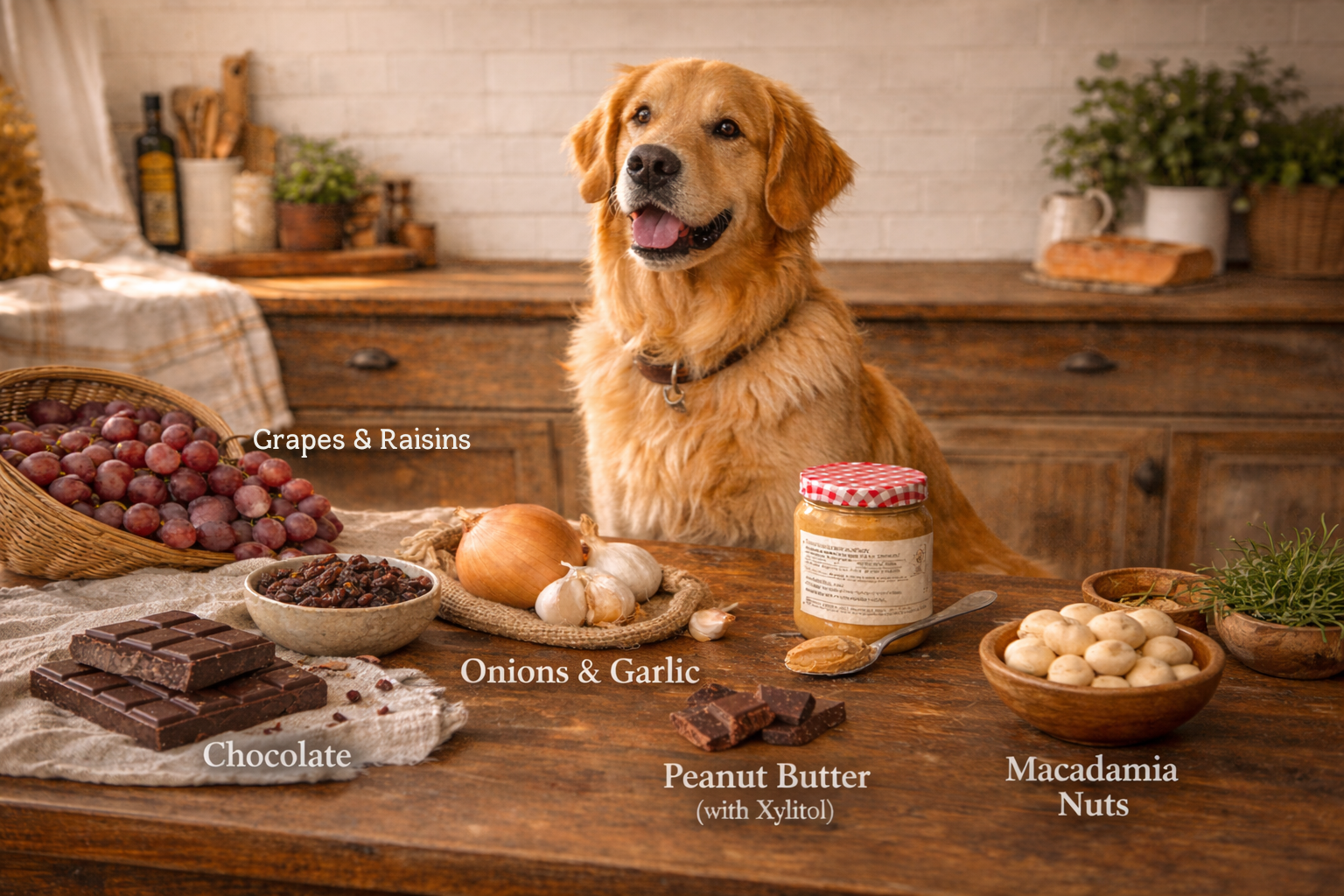
This one still catches people off guard. Grapes and raisins cause acute kidney failure in dogs. Not stomach upset. Not a bad night. Kidney failure — sometimes from a single serving.
The mechanism isn't fully understood, which makes it more alarming, not less. Researchers haven't isolated the exact compound responsible, which means there's no safe dose to work backward from. Some dogs have eaten grapes and shown no reaction. Others have gone into renal failure after a small handful. You cannot predict which dog yours will be.
Raisins are more concentrated and therefore more dangerous by weight. Trail mix, raisin bread, oatmeal cookies, fruit cake — all of these are high-risk items if your Golden gets into them. The FDA lists grapes and raisins among the most dangerous foods for dogs.
If your Golden eats grapes or raisins, call your vet immediately. Don't wait for symptoms. By the time symptoms appear, kidney damage has already begun.
2. Chocolate
Everyone knows chocolate is bad for dogs. Fewer people understand why — or how bad "bad" actually is.
Chocolate contains theobromine, a compound dogs metabolize far more slowly than humans. It builds up in their system and becomes toxic. The severity depends on the type of chocolate and the size of your dog. Dark chocolate and baking chocolate are the most dangerous. Milk chocolate is less concentrated but still a real risk in quantity. White chocolate has minimal theobromine but still contains fat and sugar that can cause pancreatitis.
A 65-pound Golden Retriever can develop serious symptoms from as little as one ounce of dark chocolate. Symptoms include vomiting, diarrhea, increased thirst, restlessness, muscle tremors, and in severe cases, seizures and cardiac arrhythmia.
The holiday risk is real. Christmas, Easter, Halloween — these are the times when chocolate is accessible and accidents happen. Keep it out of reach, and know that "out of reach" means higher than you think. Golden Retrievers are creative when motivated.
3. Onions and Garlic
Onions and garlic — along with leeks, chives, and shallots — contain compounds called thiosulfates that damage red blood cells in dogs, causing hemolytic anemia. The damage is cumulative. A little bit every day adds up.
This is the one that hides in cooked food. Baby food, broth, soups, sauces, leftovers — many of these contain onion or garlic powder, which is actually more concentrated and more dangerous than the raw versions. Owners who would never give their dog a raw onion are unknowingly feeding them garlic powder in table scraps every night.
Symptoms of onion toxicity — weakness, lethargy, pale gums, reduced appetite — can appear days after exposure, making the connection harder to identify. If your Golden has been getting table scraps regularly and seems unusually tired, this is worth a conversation with your vet.
4. Xylitol (Hidden in "Healthy" Products)
This is the one that worries veterinary toxicologists most. Not because it's the most common — it isn't — but because it's the most misunderstood, and because it's hiding in products that owners actively give their dogs.
Xylitol is a sugar substitute found in sugar-free gum, some peanut butters, sugar-free baked goods, certain vitamins, and oral care products. In dogs, it triggers a massive release of insulin, causing life-threatening hypoglycemia. At higher doses, it causes acute liver failure.
The dose required to cause hypoglycemia in dogs is approximately 0.1g per kilogram of body weight. A 65-pound Golden Retriever could be in serious danger from a few pieces of xylitol-containing gum.
The peanut butter issue deserves specific attention. Several brands — including some marketed as "dog-friendly" — use xylitol as a sweetener. Before you give your Golden peanut butter as a treat or use it to administer medication, check the ingredient label. The FDA has issued specific warnings about xylitol in pet products. If xylitol appears anywhere in the ingredients, the product is not safe for your dog.
5. Macadamia Nuts
Macadamia nuts cause a syndrome unique to dogs that isn't fully understood but is well-documented. Within 12 hours of ingestion, affected dogs develop weakness in the hind legs, vomiting, tremors, fever, and lethargy. The good news is that most dogs recover with supportive care and the condition is rarely fatal. The bad news is that it's genuinely distressing to watch, and the mechanism remains unknown — which means there's no antidote, only treatment of symptoms.
Macadamia nuts appear in cookies, trail mix, and nut butters. The combination of macadamia nuts and chocolate — common in certain cookies and candies — is particularly dangerous because you're combining two toxins at once.
What to Do If Your Golden Eats Any of These
The ASPCA Animal Poison Control Center operates 24 hours a day at (888) 426-4435. Save that number in your phone now, before you need it. There is a consultation fee, but they have veterinary toxicologists on staff who can tell you exactly how concerned to be and what to do next.
Do not wait for symptoms to appear before calling. With grape toxicity and xylitol poisoning especially, the window for effective intervention is short. Early action is the difference between a manageable situation and a crisis.
Your vet's emergency line is the other number to have ready. Know it before 2am when you need it.
The foods above are the ones that send Golden Retrievers to emergency clinics every week. Most of those visits were preventable. The owners didn't know — and now you do.
If you want a complete picture of what your Golden should and shouldn't be eating at every stage of life — including what the research actually says about protein, fat, and the supplements worth considering — the Golden Retriever Nutrition Guide covers it in full.
Disclaimer: This content is for educational purposes only and is not a substitute for veterinary care. If you believe your dog has ingested a toxic substance, contact your veterinarian or the ASPCA Animal Poison Control Center (888-426-4435) immediately.