You found the lump on a Tuesday.

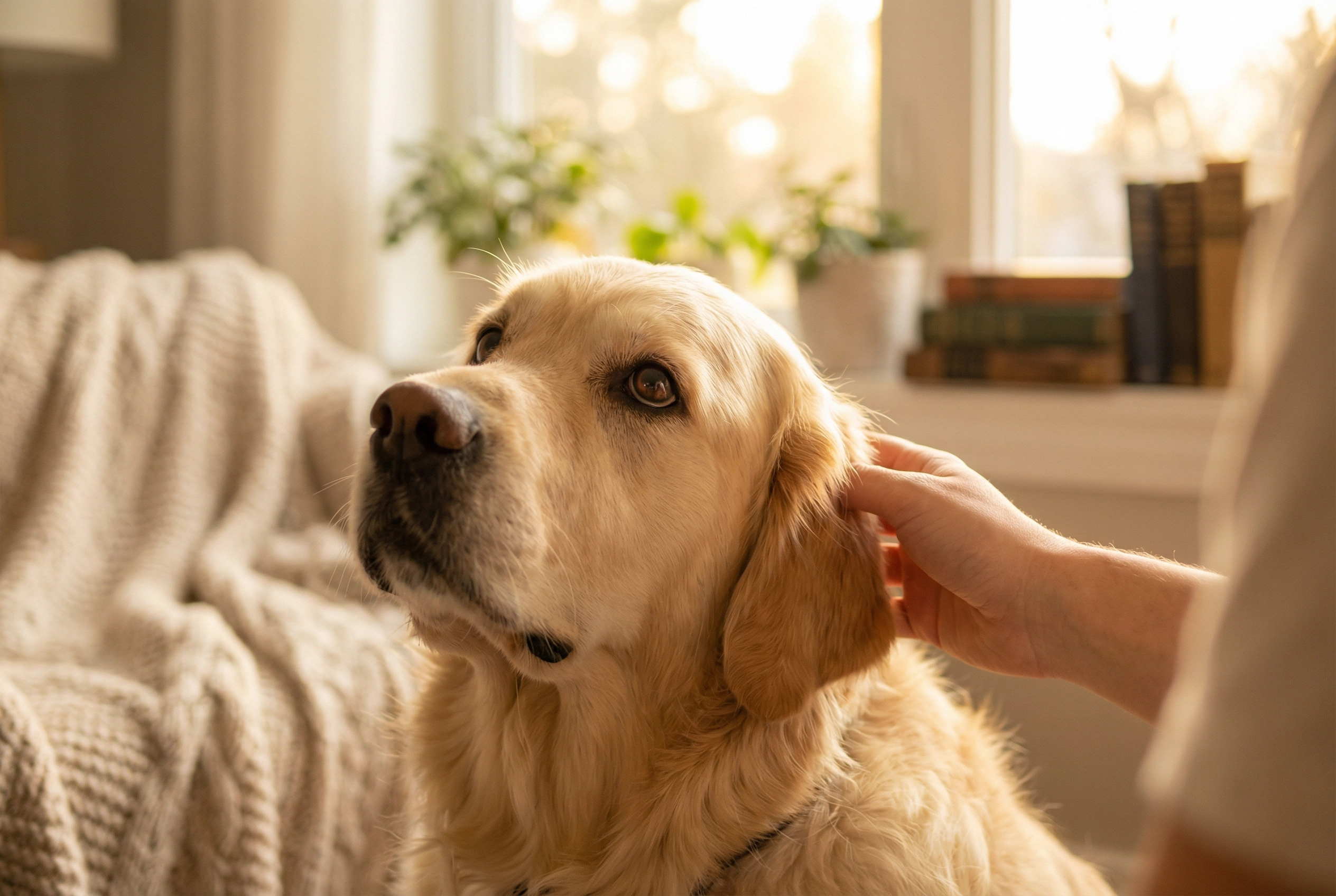
You were brushing him out after a walk, running your hand down his neck, and there it was. Under his jaw. Firm. About the size of a grape. And your stomach dropped because you realized you had no idea how long it had been there.
Maybe it's nothing. Probably it's nothing. But you don't know, and now you're replaying every grooming session from the last six months, wondering if you missed it.
This is what Golden Retriever grooming is actually for. Not the shiny coat. Not the Instagram photo. It's the ten minutes where you run your hands over every inch of your dog's body and catch the thing that doesn't belong there.
Your vet sees your Golden once or twice a year. You see him every day. That makes you the first line of defense. The question is whether you know what you're looking for.
Why Grooming Matters More for Golden Retrievers
Golden Retrievers have a double coat that looks beautiful but hides everything. Hot spots can develop under that dense fur and go unnoticed for days. Lumps can grow to marble-size before you feel them through the undercoat. Skin infections can fester in the warmth and moisture trapped against the skin.
Goldens are also predisposed to conditions that show up on or under the skin first. Hypothyroidism — common in the breed — often appears as coat changes before anything else: thinning fur, a dull texture, that "rat tail" look where the feathering disappears. Lymphoma, one of the cancers that hits Goldens hardest, usually shows up as swollen lymph nodes you can feel during a routine check. The breed is genetically prone to hot spots, allergies, and certain skin growths.
None of this is meant to scare you. It's meant to show you why grooming your Golden Retriever isn't vanity. It's surveillance. And the earlier you catch something, the better the outcome.
What to Check When Grooming Your Golden Retriever
Skin and coat. Part the fur and look at the skin underneath. You're looking for redness, flaking, moisture, or any area that looks different from the surrounding skin. Hot spots are the big one for Goldens: they're red, moist, sometimes oozing, and they can appear almost overnight, usually on the head, neck, hips, or under the ears. If you catch one early — just a small red patch — you can often treat it at home. If you miss it, it spreads fast.
Pay attention to coat texture over time. A coat that's suddenly dull, dry, or brittle can signal thyroid issues. Goldens are one of the breeds most affected by hypothyroidism, and the coat is often where it shows first.
Lumps and lymph nodes. Run your hands slowly over your dog's entire body, pressing gently. You're feeling for anything that wasn't there before. Goldens commonly develop lipomas (soft, movable fatty tumors that are almost always benign) and sebaceous cysts (firm, round bumps attached to the skin). These usually aren't urgent. But you're also checking for lumps that feel different: hard, irregular, fast-growing, or attached to deeper tissue. Those need a vet visit.
While you're at it, check the lymph nodes. There are five locations you can feel from the outside: under the jaw, in front of the shoulders, in the armpits, in the groin, and behind the knees. A normal lymph node is small and soft, often hard to find at all. An enlarged one feels like a firm grape just under the skin. Goldens are more prone to lymphoma than almost any other breed, and swollen lymph nodes are usually the first sign. If you find one, don't panic — but do call your vet.
Ears. Golden Retrievers' floppy ears trap heat and moisture, creating the perfect environment for infection. Lift each ear and look inside. Healthy ears are pale pink with minimal wax and no smell. Red, inflamed ears, dark discharge, or a yeasty odor means infection is brewing. Goldens who swim regularly are especially prone. Clean the ears after water exposure and check them weekly.
Eyes. A small amount of clear discharge is normal. Yellow or green discharge, excessive tearing, or crustiness is not. Look for cloudiness in the lens and watch for the eyelid rolling inward (entropion), a genetic condition more common in Goldens that causes the lashes to rub against the eye. If your dog is squinting or pawing at his face, get it checked.
Paws. Spread the toes and look between them. Interdigital cysts show up as red, swollen bumps between the toes, and they're painful. Check for foreign objects (grass awns, splinters), cracked paw pads, and nails that have gotten too long. Overgrown nails change how your dog walks, which affects his joints over time.
Teeth and gums. Take a quick look during grooming. Healthy gums are pink. Pale, white, blue, or yellow gums are an emergency. Red, inflamed gums along the tooth line suggest dental disease. Bad breath that's gotten worse can signal infection.
A 10-Minute Golden Retriever Grooming Routine
You don't need an hour. Ten minutes, two or three times a week, covers both coat maintenance and a basic health check.
Start at the head. Check eyes, ears, and mouth. Run your hands over the skull and down the jaw, feeling for lumps or swelling. Then move to the neck and shoulders, feeling for the lymph nodes in front of the shoulder blades. Work down the front legs, checking the armpits and paws.
Brush through the body, parting the coat to see the skin. Check the belly, the groin, and under the tail. Finish with the back legs — lymph nodes behind the knees — and rear paws.
For tools: a slicker brush for the topcoat, an undercoat rake for the dense underlayer, and a metal comb to check for mats. That's it.
When to Call the Vet
Every time you find something new, write it down. Date, location, size, texture. This matters because you'll forget the details, and your vet will want to know if something has changed.
Call the vet same-day for: a new lump that appeared quickly, an ear with significant discharge, an eye injury or sudden cloudiness, sudden lameness, or pale gums.
Monitor at home: a small, stable lipoma, a minor hot spot you caught early, slight coat thinning, mild redness between the toes.
Emergency vet: hard, swollen abdomen, lethargy with refusal to eat, white or blue gums, signs of severe pain.
The Point
Grooming your Golden Retriever isn't about making him look pretty for photos. It's about knowing his body so well that you notice when something changes. It's about catching the hot spot before it spreads, finding the lump when it's still small, seeing the ear infection before it becomes painful.
Your hands are the first diagnostic tool. Learn to use them.
Early detection changes outcomes. The monthly home check protocol, lymph node mapping, and a full early warning checklist are covered in the Golden Retriever Cancer Prevention Guide — the playbook for catching problems before they become crises.
Disclaimer: This content is for educational purposes only and is not a substitute for veterinary care. Always consult your veterinarian for health concerns.